

A Different Kind of Satchmo at the Schoolhouse Theatre: Satchmo at the Waldorf
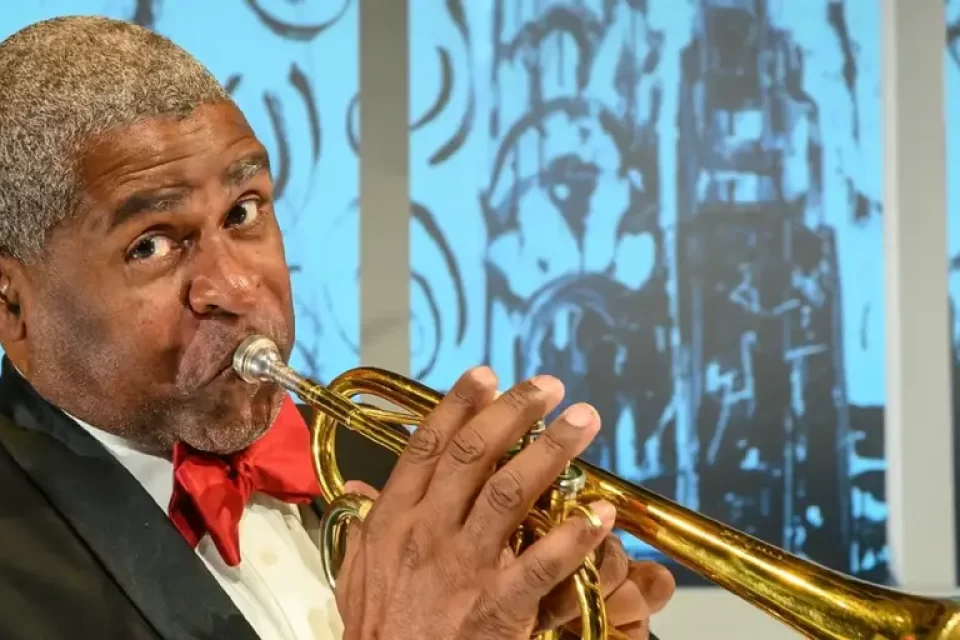
A Different Kind of Satchmo at the Schoolhouse Theatre: Satchmo at the Waldorf
When one of Dutch Schultz’s boys pulls a gun on Louis Armstrong after a performance at the Showboat in Chicago where he just signed a long term deal and tells him to pack up his handkerchief and his trumpet because he’s playing two shows in Harlem the next night—Louis calls his manager Joe Glaser. Joe calls Al Capone (or someone close to him) and Louis plays out his run at the Showboat.
Moral: It’s good to have friends in high places.
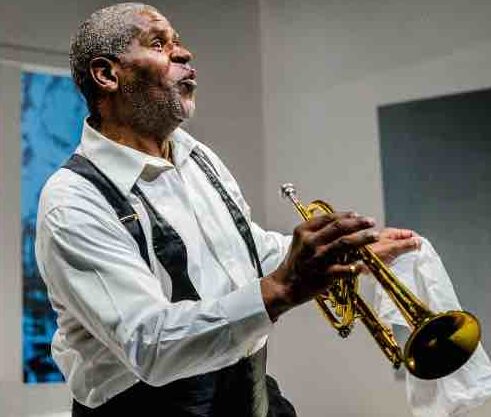 After a lifelong friendship and a wildly successful business arrangement, all conducted on a handshake, Joe Glaser considers making Louis Armstrong a partner in his Associated Booking Corporation. Thus, assuring him a cut of the company in the event of Glaser’s death. But the mob has a different idea on how the survivorship of the corporation should play out. And they both get cut out.
Moral: Be careful how you choose your friends—and how your business manager chooses his.
Such is the framework of Terry Teachout’s one-person play Satchmo at the Waldorf that opened to rave reviews from Broadway World at the Schoolhouse Theater in Croton Falls last week and that runs through June 8.
The play is set at the Waldorf Astoria where Louis Armstrong lived and played before his death. He retells colorful anecdotes of his life, but all the side stories hang on the driving narrative of betrayal revealed to Armstrong upon Glaser’s death.
Moral: A black man can’t trust a white man.
But the ironies of Satchmo’s final days play out like a house of mirrors. Even the racial narrative doesn’t adequately explain the pain Armstrong feels. You see, Louis Armstrong and Joe Glaser were friends. And while it is true that Glaser would be “nothing” without Louis. Armstrong knows that he would be “nothing” without Glaser. Who took a raw but talented New Orleans second chair trumpeter and turned him into a jazz legend and a darling of American popular culture.
 What Armstrong didn’t know as he faced his own death was that Glaser didn’t betray him, the mob took care of that one. In the beginning as it was at the end, the mob called the tune for Satchmo and for Joe Glaser—two of the best investments they ever made.
Moral: That’s show biz.
The play tells a revelatory story about Armstrong that is worth the trip even without the virtues this production brings to it. Beginning with Wali Jamal’s performance that shows us a very different side of Louis Armstrong than we have ever seen.
As effortless as he may do so, his best work—or perhaps the most fun part of his performance—is in the other characters Jamal is called on to play. Most importantly, the affectionate and matter of fact way he portrays (without stereotyping) his manager Glaser, who is part-Jew, but all thug.
And most transcendently, the way he plays Miles Davis—his outspoken nemesis who saw Armstrong as a sell-out to the white man. Anyone who is familiar with the hushed tones and spaced-out grooves Miles Davis can occupy when he speaks—will get a charge from Jamal’s portrayal.
Accolades for Director Bram Lewis are already gushing in from Broadway World’s Pia Haas, who called the production “sharp, and meticulously paced.” And Tom Christopher’s set—following the aesthetics of Brutalism—is beyond anything one would expect to see on an off-off-Broadway stage in god-forsaken Croton Falls.
Moral: If you love Satchmo, Miles Davis, mob stories, or Brutalist stage design—you’ll love Satchmo at the Waldorf at the Schoolhouse Theater in Croton Falls.
Trending Now

Best March Events

What To Do: February 24 to March 1
You may also like